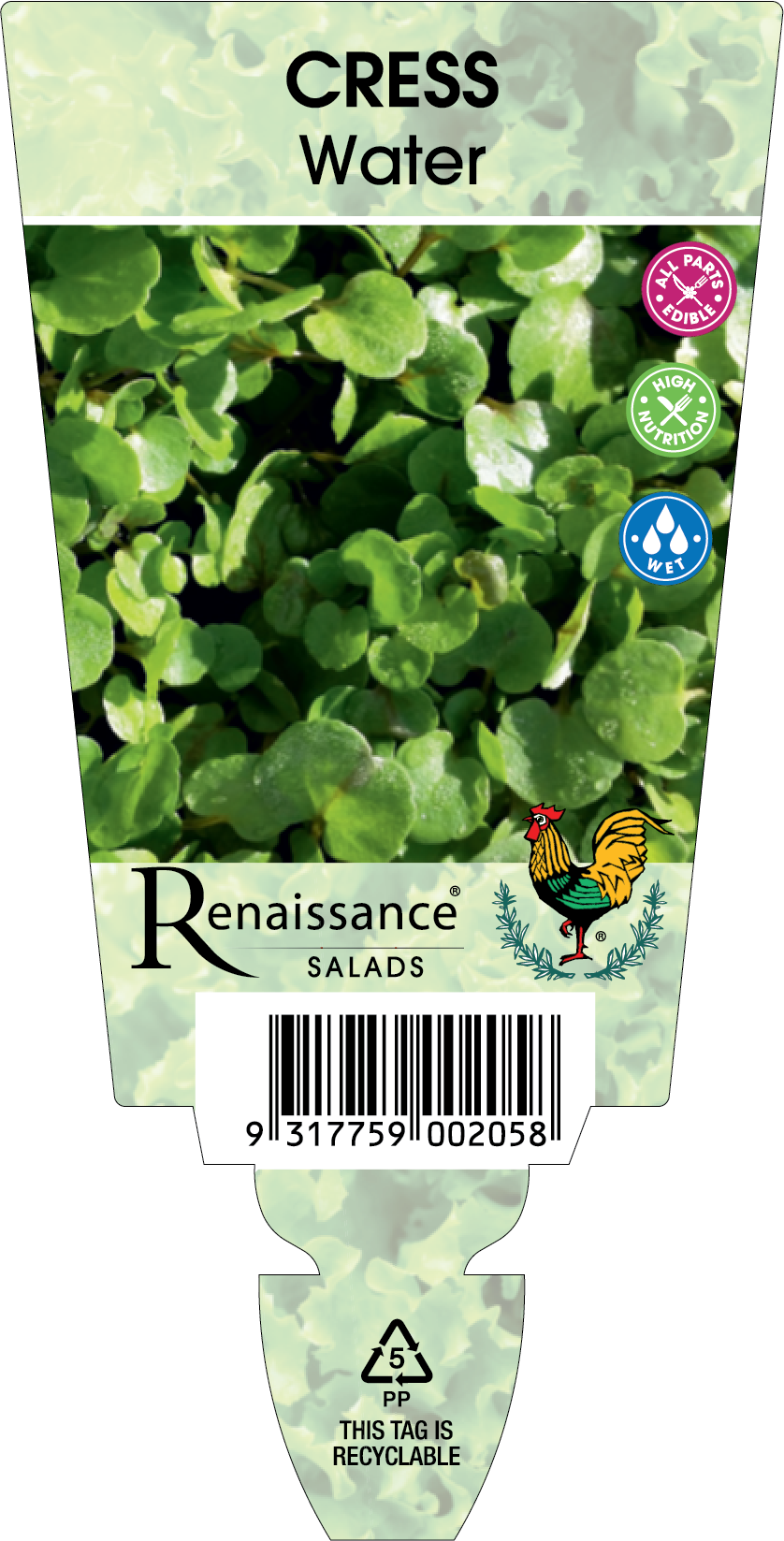
Description
(Nasturtium officinale)
Watercress is one of the few herbs you can grow that really does like its feet in water. Traditionally grown in streams of running water, watercress can often be found growing wild, although care should be taken when collecting from the wild. The water source could be contaminated with animal droppings or agricultural chemicals which may not affect the taste of the plant, but it will affect its properties and can cause illness.
Growing Tips
Cultivation of Watercress is practical on both a large scale and a garden scale. Being semi-aquatic, Watercress is well-suited to hydroponiccultivation, thriving best in water that is slightly alkaline.
Use
Watercress stimulates digestive juices. The tangy taste and smell of the leaves are indicated in the plant’s generic name, Nasturtium which comes from Latin ‘nasi tortium’ meaning nose twitching; no doubt due to the peppery taste, which causes a contraction of nasal and mouth muscles. The very best way to get the full nutritional value of watercress is to pick just before a meal and eat. Add to cooked dishes, salads, soup, stews, and stir-fries, just before serving. Therapeutic uses have included: coughs, head colds, bronchial ailments, tuberculosis, asthma, emphysema, stress, pain, arthritis, stiff back and joints, diabetes, anemia, constipation, cataracts, failing eye sight, night blindness, leukemia, cancer, hemorrhaging, heart conditions, eczema, scabies, body deodoriser, edema, bleeding gums, weight loss, indigestion, alcoholism, intestinal parasites, circulation, sluggish menstruation, lack of energy, kidney and gall stones, as a brain and nerve strengthener; ailments of the spleen, thyroid and liver; to normalise cholesterol and blood pressure; for improved memory, for mental function decline and to retard ageing; for failing or scant milk supply of nursing mothers; to regulate flow of bile, health of glands and the functions of body metabolism. It is one of the best sources of the element iodine, other than seaweed, such as kelp. Iodine is important to the function of the thyroid gland. The leaves used as a poultice are applied for relief from enlarged prostate gland. Watercress contains more sulphur than any other vegetable, except horseradish. Sulphur rich foods play an important part in protein absorption, blood purifying, cell building and in healthy hair and skin.
Herb Attributes
| Harvest | Harvest regularly. |
|---|---|
| Position | Semi Shade |
| Height | 0.3cm |
| Width | Spreading |
| Lifespan | Perennial |